
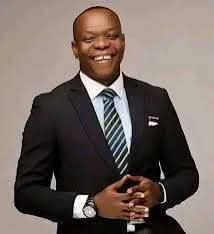

OHUHU STATE CONSTITUENCY AND AKALIRO: WHEN EQUITY AND EXPERIENCE COUNTS
The battle for the Umuahia North (Ohuhu) State Constituency seat ahead of the 2027 election is gradually assuming a dimension that goes beyond personalities, political parties and individual ambitions. At the heart of the unfolding contest are issues that have shaped the political history of Ohuhu for decades: zoning, equity, rotation, continuity and experience.
To understand the argument surrounding the 2027 election, one must first understand the history of the seat.
For years, the Umuahia North State Constituency seat has been shared between the two major political blocs of Umuhu and Okaiuga, with each bloc taking its turn for two consecutive terms, amounting to eight years, after the initial four-year arrangement.
The historical sequence is clear: Umuhu occupied the seat from 1999 to 2003, Okaiuga took over from 2003 to 2007, Umuhu returned from 2007 to 2015, while Okaiuga again occupied the seat from 2015 to 2023.
That means that when Okaiuga completed its most recent eight-year period in 2023, the seat returned to Umuhu.
And that is where the present argument begins.
If the existing understanding of the rotation is maintained, Umuhu’s current eight-year cycle, which commenced in 2023, should run until 2031 before the seat returns to Okaiuga.
But there is another layer to this conversation which cannot be ignored.
Umuhu is not one single homogeneous community. Apart from Ohiya, which falls within the Umuahia South State Constituency, the Umuhu bloc comprises several component areas, including Ofeme, Oriendu, Umuhu Etiti and Isingwu.
And when the history of representation within Umuhu is examined closely, an interesting picture emerges.
Ofeme was the first to kick-start representation from the Umuhu bloc, occupying the State House of Assembly seat from 1999 to 2003.
Oriendu subsequently occupied the seat from 2007 to 2015, enjoying an eight-year period of representation.
In other words, Ofeme and Oriendu have already had the opportunity to represent the broader Umuhu bloc at the State House of Assembly.
This is an important fact in the current debate because political equity cannot be discussed without looking at the historical distribution of opportunities.
For years, the conversation was not simply about Umuhu versus Okaiuga; there was also an internal question within Umuhu itself: which of its component communities had had the opportunity to occupy the seat?
That question became particularly significant with the emergence of Hon. Barr. Anderson Kelechi Akaliro from Umuhu Etiti.
Akaliro’s emergence represented more than the emergence of another politician. It marked the entry of Umuhu Etiti, a component of the Umuhu bloc that had not previously produced a representative for the State House of Assembly, into the constituency’s legislative history.
And this is where the argument for equity becomes difficult to ignore.
While Umuhu Etiti currently occupies the State House of Assembly seat through Akaliro, Isingwu currently occupies the Umuahia North Local Government chairmanship.
The chairmanship is not a ceremonial position. It is an executive office with administrative responsibilities and executive authority at the grassroots level.
More importantly, the current Isingwu chairman is expected to complete a four-year tenure in 2028.
If that happens, it would be a significant development in the political history of Umuahia North, particularly because, according to the argument being advanced within the constituency, no local government chairman since 1999 has completed a full four-year tenure.
So the question naturally arises: if one component of the Umuhu bloc is already occupying the local government chairmanship and is on course to complete the full four-year tenure, should the same component also seek to take over the State House of Assembly seat currently occupied by another component of Umuhu before that representation cycle is completed?
For those advocating internal equity, the answer is that political opportunities should not become concentrated in one area when other component communities are still waiting for their own opportunities.
This is why the issue should not be reduced to a contest between individuals.
It is a question of how political opportunities are distributed among brothers within the same broader bloc.
Ofeme has had its turn.
Oriendu has had its turn.
Umuhu Etiti is currently having its turn.
Isingwu, meanwhile, occupies the local government chairmanship and is expected to complete a four-year tenure in 2028.
Against this background, some may reasonably ask whether it is equitable for Isingwu to simultaneously seek the State House of Assembly position before Umuhu Etiti completes the current cycle.
But there is an even bigger question.
What happens to the Umuhu–Okaiuga zoning arrangement if the incumbent is replaced in 2027?
The current understanding is that Umuhu returned to the seat in 2023 and, having taken its first four-year tenure, is expected to complete the second tenure by 2031.
But suppose a fresh candidate emerges in 2027.
What happens if that candidate wins and, after four years, decides to seek another term in 2031?
Would the candidate willingly step aside for Okaiuga because of the existing zoning understanding?
There is no automatic guarantee.
And that is where today’s decision could potentially become tomorrow’s political dispute.
The issue, therefore, is bigger than who wins the 2027 election. It is about whether the political understanding that has helped regulate the sharing of the seat between Umuhu and Okaiuga can survive the choices made in 2027.
A zoning arrangement is sustained by trust, restraint and respect for agreed succession.
Once that understanding is disrupted, rebuilding consensus can become considerably more difficult.
This is why continuity becomes an important part of the conversation.
And then there is the other factor that politics sometimes overlooks until it becomes too late: experience.
Hon. Barr. Anderson Kelechi Akaliro is no longer entering the legislature as a newcomer.
He has already served in the Abia State House of Assembly. He has experienced the legislative process, participated in legislative business and acquired an understanding of how constituency representation works within the broader government structure.
A first-time legislator may possess enormous potential, fresh ideas and determination, but legislative experience is something that cannot simply be acquired overnight.
It takes time to understand the procedures, relationships, committees, legislative negotiations and institutional dynamics that influence what a lawmaker can achieve.
This becomes even more interesting when the question of political alignment is considered.
Akaliro is seeking to return at a time when the Labour Party controls the Abia State Government under Governor Alex Chioma Otti.
If he returns to the House in 2027, his previous experience, combined with the political configuration of the House at that time, could potentially position him for greater legislative responsibilities, including consideration for a principal-officer or other leadership position.
Such a position is not guaranteed and would depend on the composition of the House, party dynamics and the decisions of the lawmakers themselves.
But the possibility is worth considering because legislative leadership can have implications for the influence a constituency enjoys within the House.
For Ohuhu, therefore, the 2027 conversation is not merely about replacing one person with another.
It is about asking what kind of representation the constituency wants, how political equity should be maintained within Umuhu, how the Umuhu–Okaiuga arrangement should be protected, and whether experience should count when making a decision about legislative representation.
The questions are straightforward but consequential.
Has every component of Umuhu had a fair opportunity to produce a State House of Assembly representative?
Should a component that is already occupying the local government chairmanship also seek the Assembly seat before another component completes its current cycle?
Should the eight-year Umuhu–Okaiuga rotation be allowed to run its course until 2031?
What happens to that arrangement if a new candidate wins in 2027 and subsequently seeks another term in 2031?
And at a time when the political landscape is changing rapidly, should Ohuhu trade an experienced legislator for a first-time lawmaker?
These are questions that Ndi-Ohuhu must answer for themselves.
The historical record, however, provides important context.
Ofeme occupied the Assembly seat from 1999 to 2003. Oriendu occupied it from 2007 to 2015. Umuhu Etiti currently occupies it from 2023. Isingwu currently occupies the Umuahia North Local Government chairmanship.
These facts form the foundation upon which the argument for equity and continuity is being built.
For those who believe that the existing zoning arrangement should run its course, that the various component communities should have equitable access to political opportunities, and that legislative experience should count, the case for Hon. Barr. Anderson Kelechi Akaliro in 2027 is therefore built around three simple but powerful principles:
Equity. Continuity. Experience.
The choice before Ohuhu in 2027 will ultimately belong to the people.
But whatever decision is made, it should not be viewed only through the lens of today’s political contest. It should also be examined through the lens of 2031 and the political future of Ohuhu.
Because sometimes, the most important consequence of an election is not who wins today, but what that victory makes possible—or impossible—tomorrow.
Ndi-Ohuhu must look beyond the immediate contest and consider the long-term implications of every political decision.
Equity counts. Experience counts. Continuity counts.
Let’s Do It Again in 2027.
Let’s Re-elect Hon. Barr Anderson Kelechi Akaliro, Let’s Vote Labour Party, Mama Papa and Pikin.
Let’s vote performance, equity , experience and continuity.
